
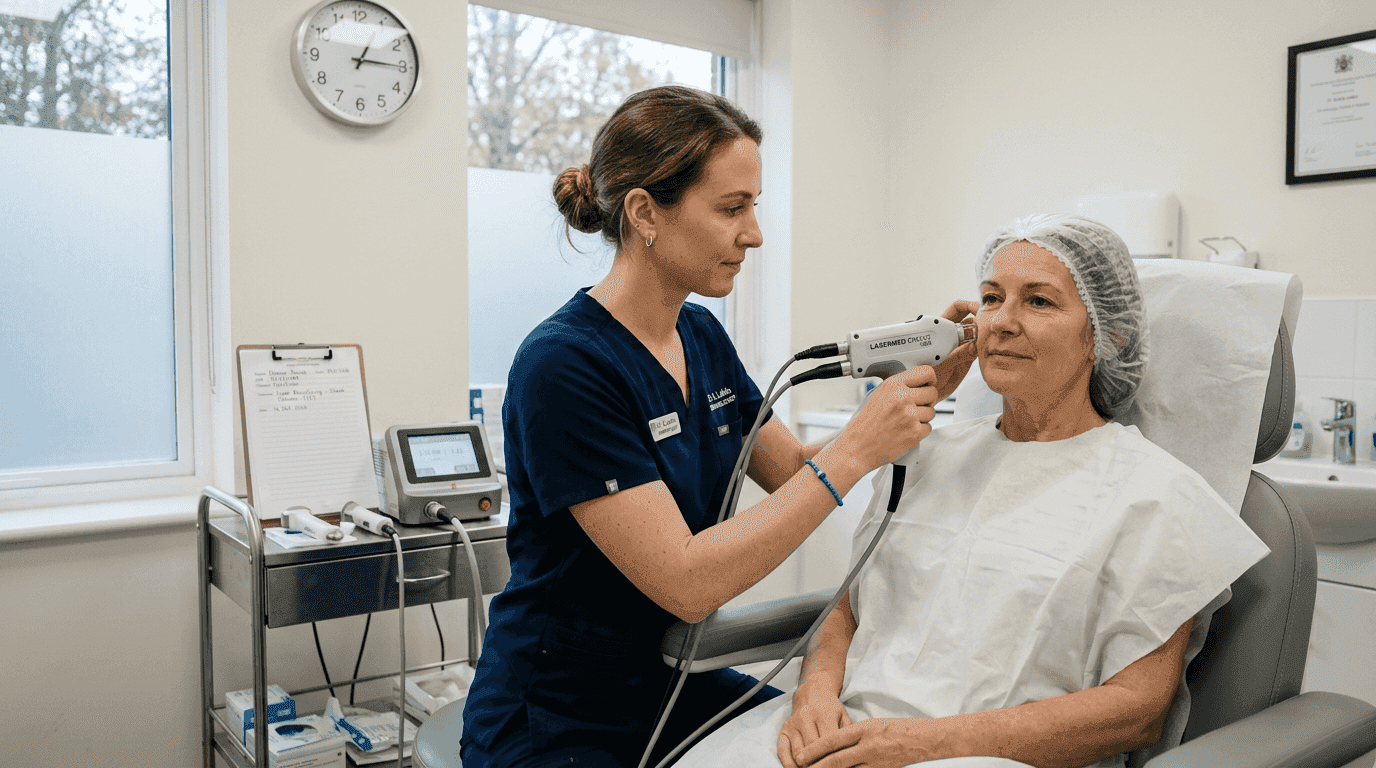
Many people believe all laser treatments work identically for pigmentation, but this couldn't be further from the truth. Different laser technologies target pigment through distinct mechanisms, each offering unique advantages for safety and effectiveness. Understanding how laser treatments remove pigmentation through selective photothermolysis helps you make informed decisions about which approach suits your skin concerns. This guide explains the science behind laser pigmentation removal, compares Q-switched and picosecond technologies, and reveals what to expect from treatment protocols tailored to your specific needs.
Table of Contents
- The Science Behind Laser Removal Of Pigmentation
- Types Of Lasers Used To Remove Pigmentation: Q-Switched And Picosecond Explained
- Tailoring Laser Treatments For Melasma And Pigmentation Depth
- What To Expect: Treatment Process, Results, And Safety Considerations
- Explore Expert Laser Pigmentation Treatments In Sheffield
- Frequently Asked Questions
Key takeaways
| Point | Details |
|---|---|
| Selective targeting | Lasers use selective photothermolysis to break down melanin without damaging surrounding tissue |
| Technology differences | Q-switched lasers use nanosecond pulses whilst picosecond lasers employ ultra-short pulses for finer fragmentation |
| Session requirements | Most pigmentation treatments require 4 to 12 sessions depending on laser type and pigmentation depth |
| Combination approach | Combining laser modes with topical care reduces relapse rates and optimises long-term results |
| Minimal disruption | Treatments cause minimal downtime with only mild temporary side effects for most patients |
The science behind laser removal of pigmentation
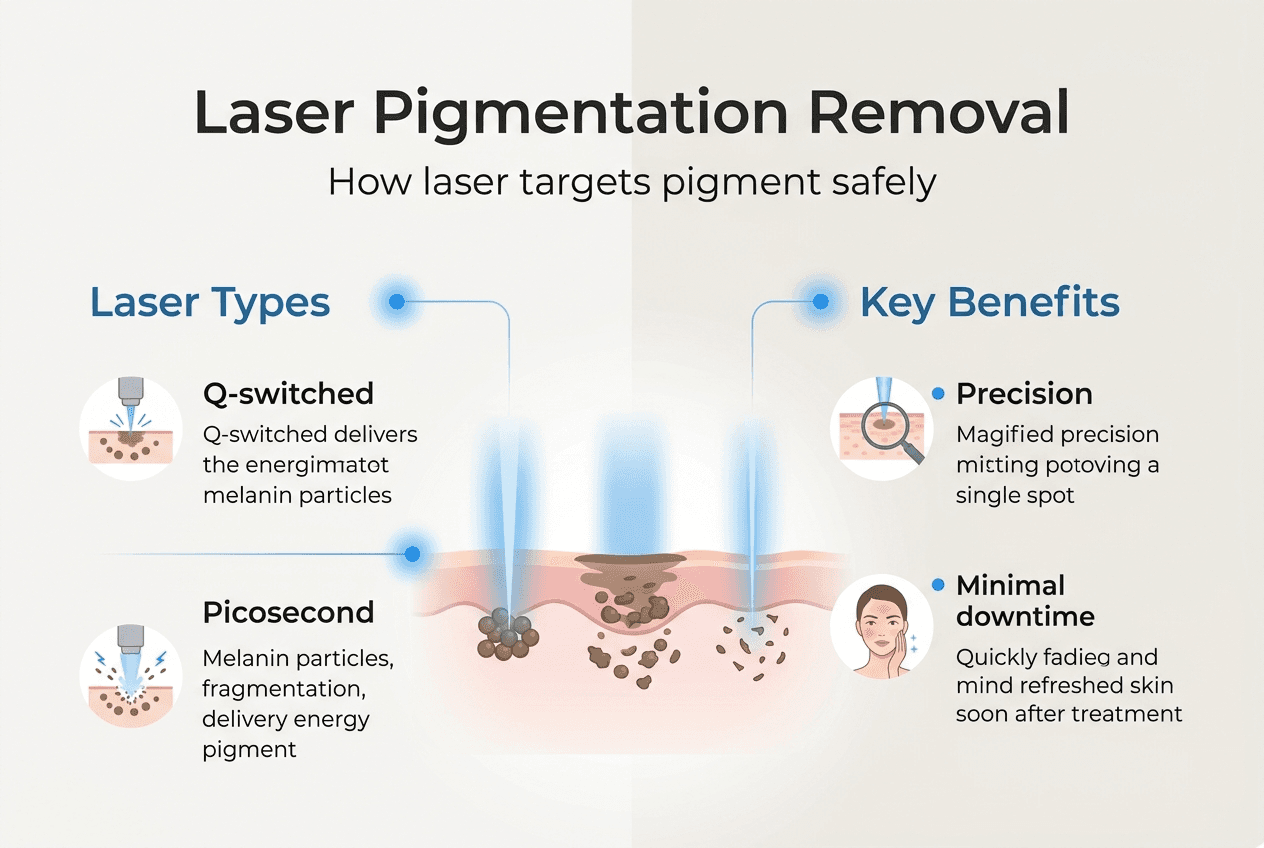
Laser treatments remove pigmentation primarily through selective photothermolysis, where laser energy is absorbed by melanin chromophores, generating heat or photomechanical effects to fragment pigment particles for macrophage clearance without damaging surrounding tissue. This precision stems from matching specific wavelengths to melanin's absorption spectrum whilst keeping pulse durations shorter than the thermal relaxation time of pigmented cells.
The process begins when laser light at wavelengths like 532nm or 1064nm penetrates the skin and encounters melanin molecules. These chromophores absorb the energy intensely, creating localised heating or pressure waves that shatter pigment clusters into microscopic fragments. Shorter wavelengths penetrate superficial layers, making 532nm ideal for epidermal pigmentation, whilst 1064nm reaches deeper dermal structures.
Your body's immune system completes the removal process through macrophages, specialised cells that recognise and engulf the fragmented pigment particles. Over weeks following treatment, these immune cells gradually transport the debris through lymphatic channels for elimination. This biological clearance explains why results appear progressively rather than immediately after each session.
Different wavelengths penetrate varying skin depths, allowing practitioners to target pigmentation at specific levels:
- 532nm wavelength treats superficial epidermal pigmentation like age spots and freckles
- 1064nm wavelength reaches deeper dermal pigmentation including some melasma and birthmarks
- Dual wavelength systems address both superficial and deep pigmentation simultaneously
- Adjustable pulse durations enable customisation for different pigment densities
The key to safe pigmentation removal lies in delivering sufficient energy to fragment melanin whilst keeping surrounding tissue unharmed through precise wavelength and pulse duration control.
Pro Tip: Understanding that skin rejuvenation treatments work through controlled tissue response helps you appreciate why multiple sessions produce better outcomes than attempting aggressive single treatments.
With this scientific foundation laid out, we can now explore the types of lasers commonly used for pigmentation removal.
Types of lasers used to remove pigmentation: q-switched and picosecond explained
Q-switched Nd:YAG lasers use nanosecond pulses at 532nm and 1064nm wavelengths to break down pigment through photothermal and photomechanical effects, making them effective for epidermal and dermal pigmentation. These established systems deliver pulses lasting 5 to 10 nanoseconds, creating rapid heating that fractures pigment particles through thermal expansion and shock waves.
Q-switched technology operates by storing energy in the laser medium before releasing it in an intense burst. This concentrated delivery creates temperatures high enough to vaporise water within pigmented cells whilst the brief duration prevents heat from spreading to adjacent tissue. The dual wavelength capability allows practitioners to switch between superficial and deep targeting during the same session.
Picosecond lasers use ultra-short pulses emphasising photoacoustic shockwaves for finer pigment fragmentation, reducing thermal damage and offering safer treatment for darker skin types. These advanced systems fire pulses lasting 300 to 750 picoseconds, roughly 100 times shorter than Q-switched technology. The ultra-brief duration creates mechanical pressure waves that shatter pigment with minimal heat generation.
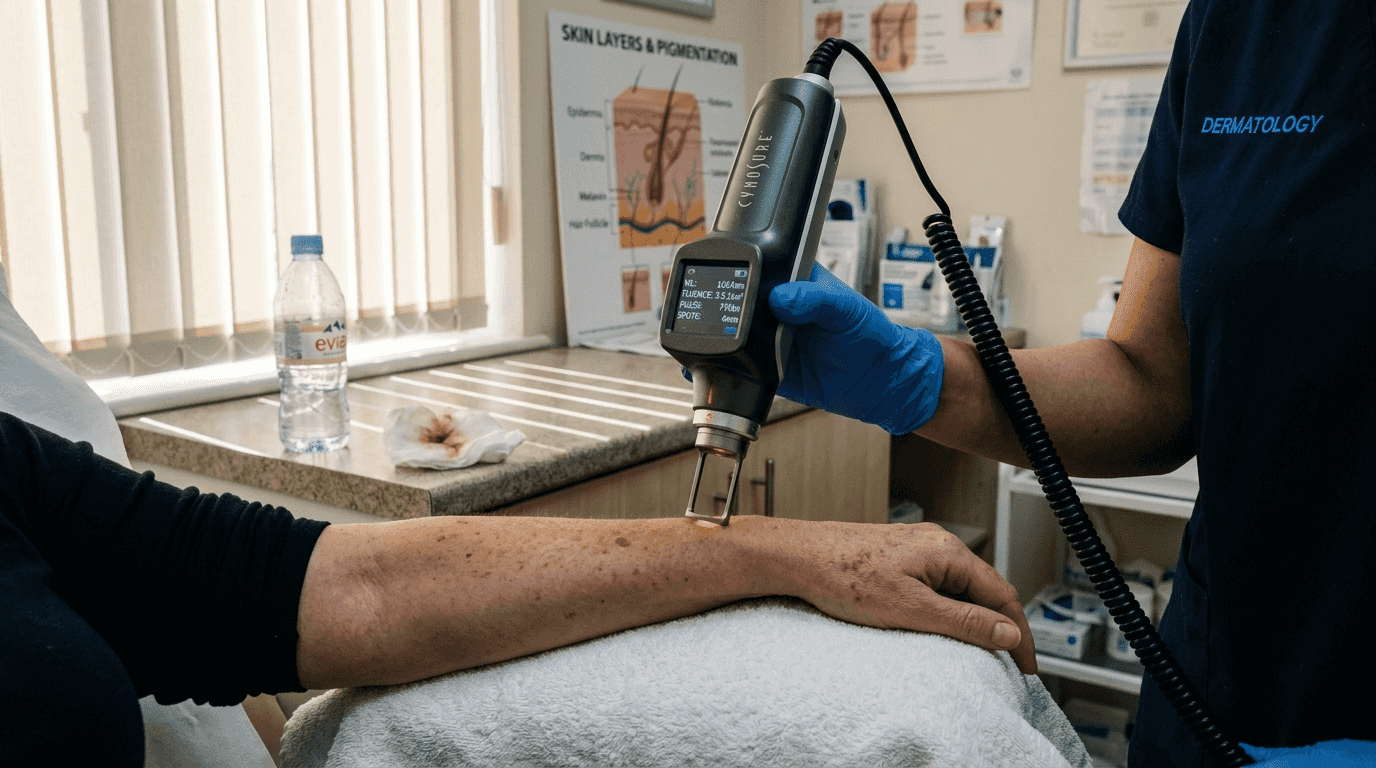
The shorter pulse duration of picosecond lasers produces predominantly photoacoustic rather than photothermal effects. This mechanical fragmentation breaks pigment into smaller particles that your immune system clears more efficiently. The reduced thermal component means less risk of post-inflammatory hyperpigmentation, particularly important for Fitzpatrick skin types IV to VI.
Picosecond lasers typically require 4 to 8 sessions for significant improvement, whilst Q-switched systems usually need 8 to 12 treatments. This difference stems from the finer particle fragmentation achieved by picosecond technology, accelerating the biological clearance process. However, individual results vary based on pigmentation type, depth, and density.
| Laser type | Pulse duration | Wavelengths | Typical sessions | Ideal use cases |
|---|---|---|---|---|
| Q-switched | 5-10 nanoseconds | 532nm, 1064nm | 8-12 | Established pigmentation, cost-effective treatment |
| Picosecond | 300-750 picoseconds | 532nm, 755nm, 1064nm | 4-8 | Stubborn pigmentation, darker skin types, faster results |
Pro Tip: Whilst picosecond technology offers advantages, Q-switched lasers remain highly effective for many pigmentation concerns and provide excellent value, similar to how different laser hair removal technology and electrolysis hair removal methods serve different patient needs.
Understanding these laser types helps clarify selection criteria for treating specific pigmentation conditions.
Tailoring laser treatments for melasma and pigmentation depth
For melasma, low-fluence Q-switched 1064nm Nd:YAG laser toning is standard, with combinations using microsecond pulse or fractional modes improving efficacy and reducing relapse. This approach delivers sub-therapeutic fluences in multiple passes, gradually reducing pigmentation without triggering the inflammatory response that worsens melasma. The technique requires patience but produces more stable results than aggressive single-pass treatments.
Melasma presents unique challenges because it often involves hormonal and inflammatory components beyond simple pigment accumulation. Traditional high-fluence laser treatments can paradoxically worsen the condition by creating inflammation that stimulates melanocytes. Low-fluence toning circumvents this problem by using gentle, repeated stimulation that encourages gradual pigment clearance without inflammatory triggers.
Combination treatments reduce relapse rates from approximately 50% with laser monotherapy to significantly lower levels. Integrating microsecond pulse modes with Q-switched nanosecond treatments addresses both dermal and epidermal components simultaneously. Fractional laser resurfacing creates microscopic treatment zones that stimulate collagen remodelling whilst allowing rapid healing from surrounding untreated tissue.
Relapse remains a significant concern with melasma treatment, as the condition tends to recur even after successful pigment clearance. Maintenance protocols combining periodic laser sessions with daily sun protection and topical agents provide the best long-term control. Hydroquinone, tranexamic acid, and vitamin C serums complement laser treatments by inhibiting melanin production through different pathways.
Laser sessions typically follow this protocol for optimal results:
- Initial consultation assesses pigmentation type, depth, and skin phototype to determine appropriate laser parameters and realistic expectations
- Patch testing on a small area confirms safe response and helps fine-tune energy settings before full-face treatment
- Treatment sessions scheduled 4 to 6 weeks apart allow complete healing and pigment clearance between interventions
- Progress photography at each visit documents improvements and guides parameter adjustments for remaining sessions
- Post-treatment care includes broad-spectrum SPF 50+ sunscreen, gentle cleansers, and prescribed topical agents to support healing
- Maintenance phase begins after initial series, typically involving quarterly touch-up sessions and continued topical therapy
- Long-term follow-up monitors for recurrence and adjusts maintenance protocols based on individual response patterns
Pigmentation depth significantly influences treatment planning, as superficial epidermal pigment responds more quickly than deep dermal deposits. Combination approaches using different wavelengths in sequence or simultaneously address multi-layer pigmentation more effectively than single-wavelength protocols. Laser treatment protocols for complex cases may integrate multiple laser types over the treatment course.
Pro Tip: Sun protection isn't optional during laser pigmentation treatment but absolutely essential for success, as UV exposure can trigger melanin production that undermines your progress and increases relapse risk substantially.
After detailing laser types, we examine how treatments are tailor-made for specific conditions and patient needs.
What to expect: treatment process, results, and safety considerations
Treatment outcomes typically show 50 to 75% improvement in 3 to 10 sessions with minimal downtime of a few days. Results appear gradually as your immune system clears fragmented pigment, with most visible changes occurring 4 to 8 weeks after each session. Complete clearance isn't always achievable, particularly for deep dermal pigmentation or hormonally influenced conditions like melasma.
Session frequency depends on the laser technology and your skin's healing capacity. Picosecond treatments often space 4 to 6 weeks apart, whilst Q-switched protocols may extend to 6 to 8 weeks between sessions. This interval allows complete resolution of post-treatment inflammation and maximises pigment clearance before the next intervention.
Minimal downtime characterises modern laser pigmentation treatments, with most people resuming normal activities within 24 to 48 hours. Immediately after treatment, you'll notice redness and slight swelling similar to mild sunburn. Some pigmented areas temporarily darken before lightening, a normal response called post-treatment hyperpigmentation that resolves within weeks.
Safety profiles for laser pigmentation removal are excellent when performed by experienced practitioners using appropriate technology for your skin type. Picosecond lasers offer enhanced safety for darker skin tones compared to older technologies. Proper pre-treatment assessment and conservative initial settings minimise adverse effects whilst test patches identify any unusual responses before full treatment.
Practical care tips optimise your treatment experience and results:
- Avoid sun exposure for 4 weeks before treatment and throughout the entire treatment course
- Discontinue retinoids and exfoliating acids 1 week before each session to prevent excessive sensitivity
- Apply prescribed numbing cream 45 minutes before treatment if you have low pain tolerance
- Use gentle, fragrance-free cleansers and moisturisers during the healing period
- Apply cold compresses for 10 to 15 minutes several times daily if swelling occurs
- Resume makeup application after 24 hours using mineral-based products that won't clog healing pores
| Side effect | Frequency | Duration | Management |
|---|---|---|---|
| Redness and swelling | Very common (>80%) | 1-3 days | Cold compresses, gentle skincare |
| Temporary darkening | Common (40-60%) | 2-4 weeks | Sun avoidance, patience |
| Crusting or scabbing | Occasional (20-30%) | 5-7 days | Moisturiser, no picking |
| Post-inflammatory hyperpigmentation | Uncommon (5-15%) | 2-6 months | Topical lightening agents, sun protection |
| Hypopigmentation | Rare (<5%) | Months to permanent | Prevention through proper technique |
Pro Tip: Choosing a qualified clinic specialising in pigmentation laser treatments makes an enormous difference in outcomes, as experience with diverse skin types and pigmentation patterns enables precise parameter selection that maximises results whilst minimising risks.
Pain levels during treatment vary by individual sensitivity and treatment area, typically described as rubber band snaps against the skin. Most people tolerate sessions without anaesthesia, though numbing cream provides additional comfort for sensitive individuals. The brief pulse durations of modern lasers create momentary discomfort rather than sustained pain.
Skin type considerations extend beyond Fitzpatrick classification to include factors like tanning history, previous treatments, and medication use. Certain drugs increase photosensitivity and must be discontinued before laser treatment. Your practitioner should conduct a thorough medical history review to identify any contraindications or factors requiring protocol modifications.
Long-term maintenance preserves your results and prevents recurrence. This includes religious sun protection, periodic touch-up sessions as needed, and topical agents that inhibit melanin production. Many people find that laser treatment options integrate well into comprehensive skincare routines addressing multiple concerns simultaneously.
Having understood treatment customisation, we now explore the practical journey and safety to help you prepare confidently.
Explore expert laser pigmentation treatments in Sheffield
SquareOne Laser Clinic offers tailored laser pigmentation removal in Sheffield using advanced technology matched precisely to your skin type and pigmentation concerns. Our experienced practitioners conduct thorough consultations to design personalised treatment protocols that deliver optimal results whilst prioritising your safety and comfort throughout the process.
Beyond pigmentation treatment, we provide comprehensive skin rejuvenation services and laser hair removal treatments that address multiple aesthetic concerns. Our clinic combines state-of-the-art laser systems with meticulous attention to individual needs, ensuring each treatment achieves your specific goals. Transparent tattoo removal pricing and complimentary consultations help you make informed decisions about your skincare journey.
To conclude, consider trusted local expertise to apply the knowledge shared here in your skincare journey.
Frequently asked questions
How many laser sessions are typically needed to see pigmentation improvement?
Generally 4 to 12 sessions are required depending on laser type and pigmentation depth, with picosecond technology usually achieving results in fewer treatments than Q-switched systems. Superficial pigmentation like freckles often responds within 3 to 5 sessions, whilst deeper dermal pigmentation or melasma may require 8 to 12 treatments. Your practitioner assesses progress after each session and adjusts the treatment plan accordingly, as individual response varies based on skin type, pigmentation density, and lifestyle factors like sun exposure.
Is laser pigmentation removal safe for darker skin tones?
Picosecond lasers offer safer treatment with less thermal damage for darker skin types compared to older technologies, significantly reducing the risk of post-inflammatory hyperpigmentation. Proper wavelength selection matters enormously, with 1064nm providing the safest option for Fitzpatrick skin types IV to VI. Experienced operators who understand melanin distribution patterns in diverse skin types can adjust parameters conservatively to achieve effective pigment removal whilst protecting surrounding tissue from heat-related complications.
What is the downtime after a laser pigmentation treatment session?
Minimal downtime of a few days is typical, with most people resuming normal activities within 24 to 48 hours after treatment. Skin may show mild redness or swelling resembling light sunburn, which resolves quickly with cold compresses and gentle skincare. Some treated areas develop temporary crusting that heals within 5 to 7 days, during which makeup can conceal any visible effects. Avoiding strenuous exercise and heat exposure for 48 hours prevents excessive swelling and optimises healing.
Can laser treatments completely remove all types of pigmentation?
Effectiveness varies by pigmentation type and depth, with some conditions responding better than others to laser intervention. Epidermal pigmentation like solar lentigines and freckles often achieves 80 to 100% clearance, whilst dermal pigmentation shows more variable results. Melasma may require combination treatments and ongoing maintenance rather than achieving permanent complete removal, as its hormonal and inflammatory components can trigger recurrence even after successful initial clearance. Realistic expectations based on your specific pigmentation type ensure satisfaction with outcomes.